

Day in the life7 min
Medication rounds, supervising a team, family conversations and care plans. What the senior carer role actually involves, and how it differs from the floor.
By Jack Fenwick, Staff Writer — Jack covers social care careers and qualifications for Healthcare Job Search.
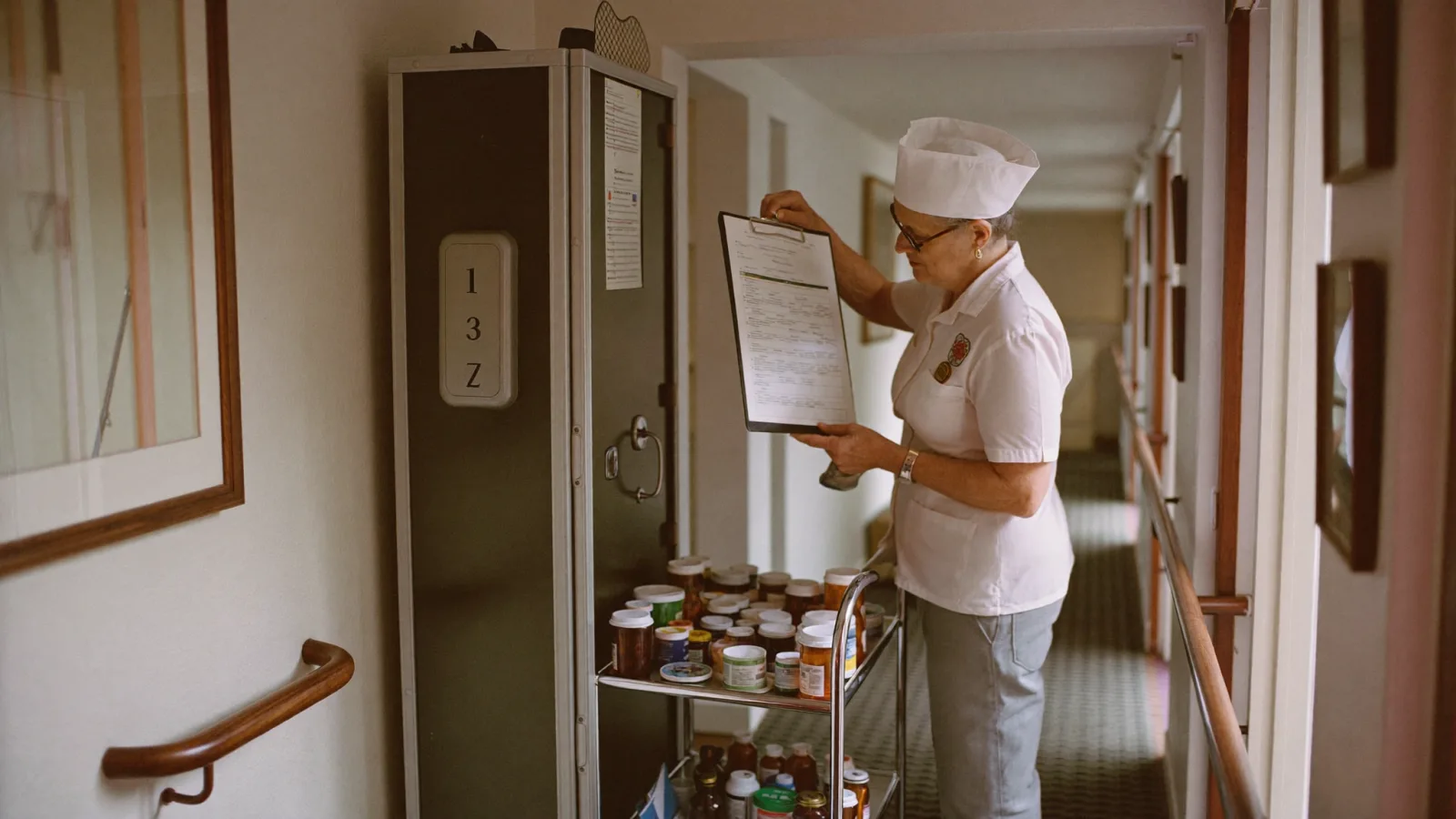
The step from care assistant to senior carer is one of the most common promotions in social care, and one of the least prepared for. The job changes more than the title suggests: you are still doing hands-on care, but you are also responsible for medication, for the shift running properly, and increasingly for other people's practice. To make it concrete, this article follows a composite day shift in a residential care home with a mix of residential and dementia care. The senior described, Nadia, is not a real person; she is an illustrative composite drawn from common patterns.
Nadia arrives just before seven and takes handover from the night senior. Twenty-eight residents. Three things stand out.
One gentleman was awake and distressed for much of the night and has eaten nothing since yesterday lunchtime. One lady has a new area of redness on her sacrum that the night staff have documented and repositioned for. And a third resident's family are visiting today to discuss a possible move to nursing care, which the manager will lead but which Nadia will be asked about.
She also finds out she is one carer down. Someone has called in sick and the agency has not been able to cover. She now has to redistribute the morning across four staff instead of five, which she does on the handover sheet before anyone starts.
Mornings in a care home are the busiest part of any day, because almost everyone needs support at once and everyone would like it first.
Nadia works the floor alongside the team for the first hour, doing personal care herself. This is deliberate. Seniors who stop doing hands-on care lose the thread of what is actually happening with residents, and they lose credibility with a team who notice immediately.
She also uses it to check the things a handover sheet does not carry: whether the gentleman who did not eat looks unwell rather than just low, whether the redness has changed, whether anyone seems different from yesterday.
This is the part of the job that most distinguishes a senior, and it is the part with the least room for error.
Nadia takes the trolley, unlocks it, and works through the round. Each resident: the right person, the right medicine, the right dose, the right time, the right route. Checking the MAR chart, signing after administration rather than before, and dealing with the ones that are not straightforward.
One resident refuses hers. This is not a matter of persuading her; it is a matter of finding out why, trying again later, and recording the refusal properly. Another is prescribed something as required, which means a judgement about whether it is needed, made against what the care plan says and what she can observe.
There is a controlled drug to administer, which requires a second signature and a separate register. And there is one medicine that has not come from the pharmacy, which means a phone call, a note, and a follow-up.
The round takes over an hour and a half and is interrupted constantly. Interruption during medication is a well-recognised cause of error, and good homes protect the round. Nadia asks not to be disturbed unless it is urgent, and defines urgent.
After the round, the senior's day becomes a mixture of everything.
Care plans. Reviewing and updating the documentation for residents whose needs have changed. The lady with the pressure area needs her repositioning plan updated, a body map completed, and a referral to the tissue viability service considered.
A visiting professional. The district nurse comes to review a dressing, and Nadia goes round with her, which is how she learns things that will not otherwise reach her.
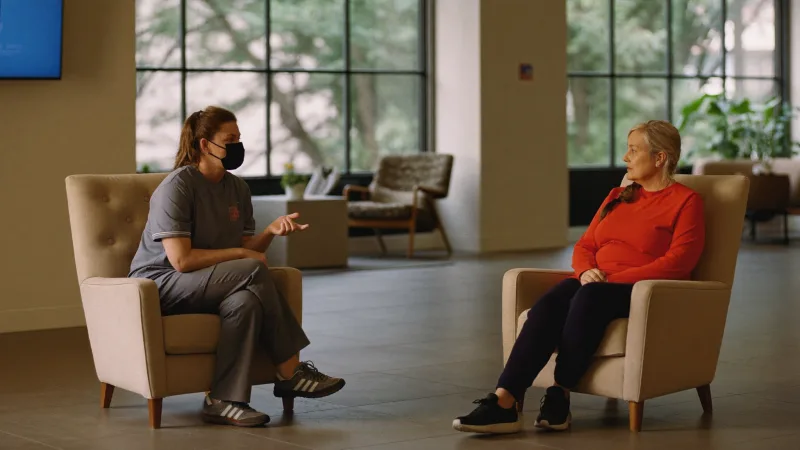
A family conversation. A daughter wants to know why her mother seems more confused. Nadia listens, explains what has been observed and documented, does not speculate about diagnosis, and arranges for the manager to call her back. Knowing where her own limits are is part of the role.
Supervising the team. Two of the carers are new, and one is on her first week. Nadia checks in on how she is finding it, watches a moving and handling transfer without making it obvious she is watching, and gives a small correction quietly rather than in front of a resident.
An incident. A resident has a fall in the lounge in the afternoon. Nadia assesses him, checks for injury, follows the falls protocol, decides whether he needs an ambulance, informs the family and the manager, and completes the accident record and the body map. She also thinks about why it happened, because the paperwork is not the point.
Lunch matters more than an outsider would expect. Nutrition and hydration are among the most common areas of concern in inspections, and monitoring intake is a genuine clinical responsibility. Nadia checks the food and fluid charts for the residents on monitoring, and makes sure the gentleman who has not eaten is offered something he might actually want rather than what is on the trolley.
Afternoons are quieter and are when the social part of the home happens: activities, visitors, someone's family bringing a dog in, a hairdresser. Seniors who protect this time rather than treating it as a gap to catch up on paperwork are the ones residents notice.
Nadia hands over to the evening senior. Same discipline as the morning: what has changed, what to watch, what has been escalated and is still outstanding.
She then finishes her own documentation, which almost always runs past the end of the shift.
Accountability shifts. You are responsible for medication administration, for the shift, and increasingly for what other people do. If something goes wrong on your shift, you will be part of the conversation about why.
You are between the team and management. You are still one of the carers socially, and you now have to raise concerns about them. This is the part new seniors find hardest, and it is worth being prepared for.
Documentation becomes a substantial part of the job. Care plans, risk assessments, incident records, monitoring charts, medication records. Inspections look closely at these, and a home with poor records is judged on them regardless of how good the care actually is.
Safeguarding responsibility increases. You are more likely to be the person who receives a disclosure or notices a pattern, and you are expected to know the escalation route without having to look it up.
Senior roles usually expect or support a level 3 diploma in adult care, with a level 5 becoming relevant if you want to move toward deputy or registered manager. Medication competency assessment is normally required before you administer, and it is reassessed periodically. Homes that promote people into senior roles without funding the level 3 or completing proper medication training are ones to be cautious of.
The route from here is well established: senior carer to deputy manager to registered manager, with the level 5 as the qualification that unlocks the later steps. Some seniors move sideways into specialist roles, into training, or into community and domiciliary care coordination. Others use the experience as a foundation for nursing, since the assessment skills, medication knowledge and understanding of long-term conditions transfer directly.
This article is general information, not legal, immigration or medical advice. Always confirm current requirements with the relevant official body.
Where to look next
Keep reading
We would like to set one optional cookie that recognises your browser when you come back, so we can tell returning visitors from new ones. It stays off unless you say yes, and you can change your mind at any time. Cookies that keep you signed in are always on. Read our cookie policy