Day in the life7 min
Observations, one-to-ones, de-escalation and the long quiet stretches. An honest look at a role that is far more skilled than the job title suggests.
By Grace Donnelly, Staff Writer — Grace writes profession explainers and day-in-the-life features for Healthcare Job Search.
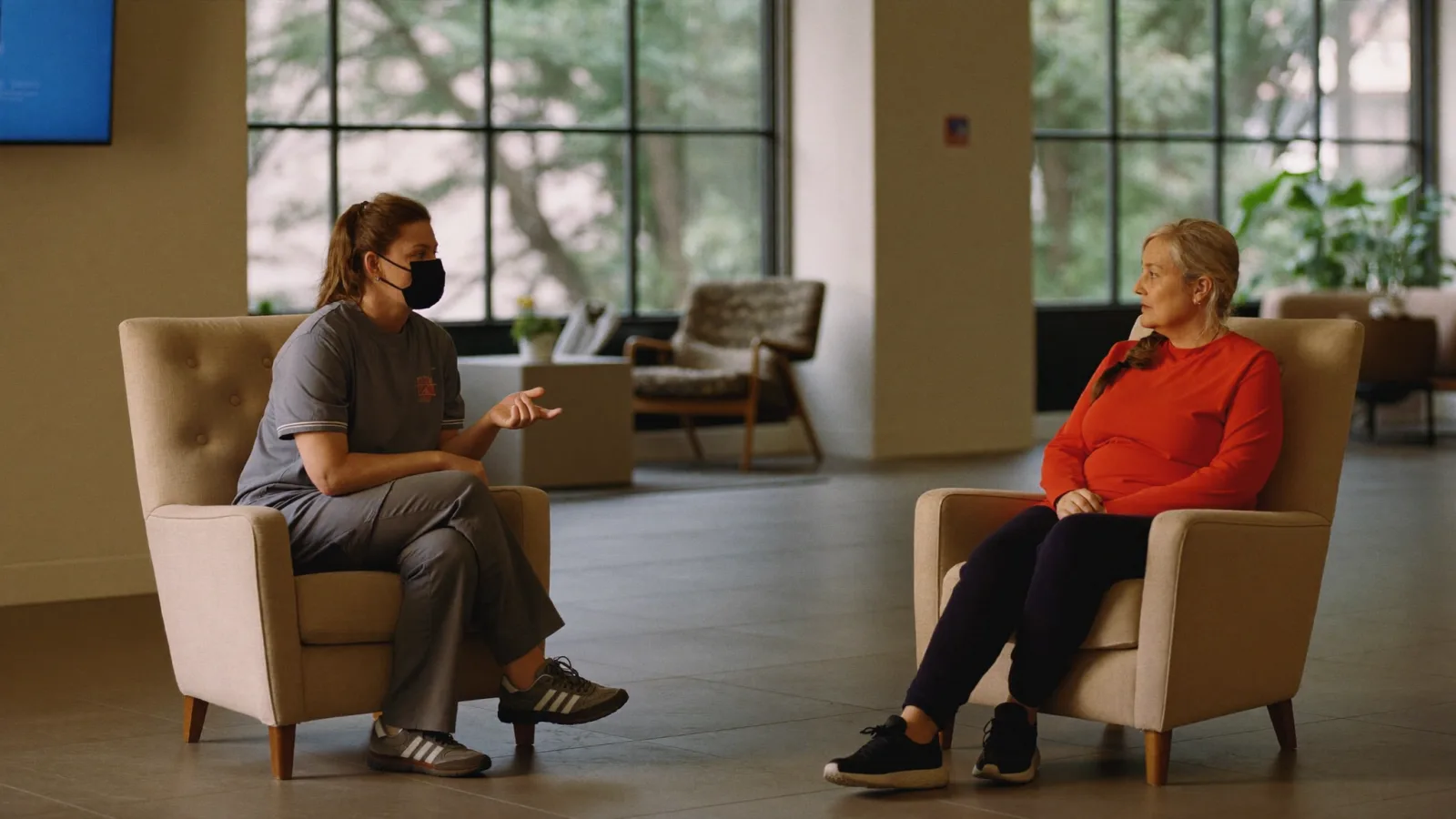
Mental health support worker is one of the most undersold job titles in healthcare. The word "support" suggests something auxiliary, and the pay band suggests an entry-level role, but the work involves sustained therapeutic contact with people who are seriously unwell, and the skills it requires are substantially more sophisticated than the title conveys. To make it concrete, this article follows a composite day shift on an adult acute mental health inpatient ward. The support worker described, Ade, is not a real person; he is an illustrative composite drawn from common patterns.
Handover on a mental health ward covers different ground than on a general ward. There are still physical health matters, and they matter more than people assume, but the bulk of it is about mental state, risk and what has changed.
Today: one person admitted overnight under section, currently very distressed and not engaging. One person on enhanced observations following an incident of self-harm yesterday. One person due to be assessed for discharge, who is anxious about leaving. One person who has been refusing food and fluids for two days. And a general note that the ward has been tense since an incident earlier in the week, which affects everyone on it.
Ade is allocated to enhanced observations for the first part of the shift and takes over from the night staff.
Enhanced observations are frequently described in a way that makes them sound like surveillance: being within sight or within arm's length of someone for a period. Done badly, that is exactly what they are, and they are experienced by patients as intrusive and dehumanising.
Done well, they are therapeutic contact. Ade's approach is to be present rather than watchful: sitting nearby, being available, talking when the person wants to talk and being quiet when they do not, offering a drink, suggesting a walk to the courtyard. The clinical purpose is safety, but the mechanism through which safety actually happens is relationship.
This is the part of the job that is hardest to teach and most obviously distinguishes people who are good at it. It also requires stamina of a particular kind. Sitting with someone in serious distress for two hours, without fixing anything, is more tiring than most physical work.
The ward has a rhythm even when individuals do not. Breakfast, medication, morning meeting, and then the day.
Ade supports the person who has not been eating. This is not a matter of encouraging them to have breakfast. It requires understanding why: whether it is part of a delusional belief, a symptom of severe depression, a physical problem, or a form of control in an environment where they have very little. What he observes gets fed back to the nursing team and the doctors, and it changes what is done.
He also spends time with the newly admitted person, who is frightened and does not want to be there. Much of the first day of an admission is spent by support workers, not by clinicians, and the tone set in those first hours affects how the whole admission goes.
Mid-morning, a situation develops. Two patients, an argument in the corridor, voices raised, and one of them escalating quickly.
The response is not dramatic. Ade moves in early, before it becomes an incident, keeps his distance and his hands visible, speaks quietly, uses the person's name, does not stand between them and the exit, does not tell them to calm down, and separates the situation by drawing one of them away with a suggestion rather than an instruction.
Most incidents that are prevented are prevented like this, by staff who know the person, notice the change early and intervene before anyone is committed to a position. De-escalation training is mandatory in these settings, and the physical intervention component is the part that gets attention, but the overwhelming majority of the skill is verbal and relational.
Sometimes it does not work and restraint becomes necessary. When it does, it is a team response with defined roles, it is documented in detail, and there is a debrief afterwards for staff and, importantly, for the patient. Services vary in how well they do the debrief part.
Afternoons on an acute ward involve a mixture of structured activity and unstructured time. Groups, one-to-one sessions, escorted leave, appointments, and a great deal of ordinary human contact: a game of cards, a walk around the grounds, helping someone phone their family, sitting with someone who cannot say what is wrong.
Ade escorts someone on leave into town, which is a clinical activity dressed as an errand. How the person copes outside the ward is directly relevant to whether they are ready for discharge, and what he observes goes into the notes.
He also does physical health observations. This is easy to overlook and matters enormously. People with severe mental illness have significantly worse physical health outcomes and a substantially reduced life expectancy, much of it from preventable physical conditions. Monitoring physical health on a mental health ward is not a box-ticking exercise, and the support worker is usually the person doing it.
Detained patients. A significant proportion of people on an acute ward do not want to be there and are there lawfully against their wishes. Building a working relationship in that context is genuinely difficult, and it requires holding both things at once: that you are part of the reason they cannot leave, and that you are on their side.
Chronic distress rather than acute crisis. The crises are exhausting but they end. The harder thing is sustained contact with someone whose suffering does not lift, and doing it without either detaching or absorbing it.
Risk. Verbal aggression is common and physical assault happens. Services differ enormously in how seriously they take staff safety and how well they support people afterwards.
The gap between what is needed and what exists. Discharge to nothing, waiting lists for therapy, people readmitted because community support fell away. Support workers see this at close range.
Handover out, documentation, and often a short informal conversation with a colleague about the day, which is frequently more useful than any formal system.
Good services have clinical supervision, reflective practice sessions and access to psychological support for staff, and use them. Asking about these at interview tells you a great deal about a ward.
The core skills are the ability to build rapport quickly with people who have reason not to trust you, tolerance of distress without needing to fix it, observation and accurate description of mental state, and the judgement to know when to step in and when to leave someone alone.
It is one of the best possible foundations for a mental health nursing degree, and a very large number of mental health nurses started here. Progression also runs toward senior support worker roles, nursing associate, assistant psychologist posts for those with a psychology degree, peer support worker roles, and specialist areas such as forensic, older adult, eating disorders and child and adolescent services.
For anyone considering mental health nursing, a year in this role will tell you more about whether the work suits you than any amount of reading.
This article is general information, not legal, immigration or medical advice. Always confirm current requirements with the relevant official body.
Where to look next
Keep reading
We would like to set one optional cookie that recognises your browser when you come back, so we can tell returning visitors from new ones. It stays off unless you say yes, and you can change your mind at any time. Cookies that keep you signed in are always on. Read our cookie policy