Day in the life7 min
A caseload, a car and a boot full of dressings. Community nursing gives you autonomy most ward roles cannot, and a working day shaped entirely by geography.
By Grace Donnelly, Staff Writer — Grace writes profession explainers and day-in-the-life features for Healthcare Job Search.
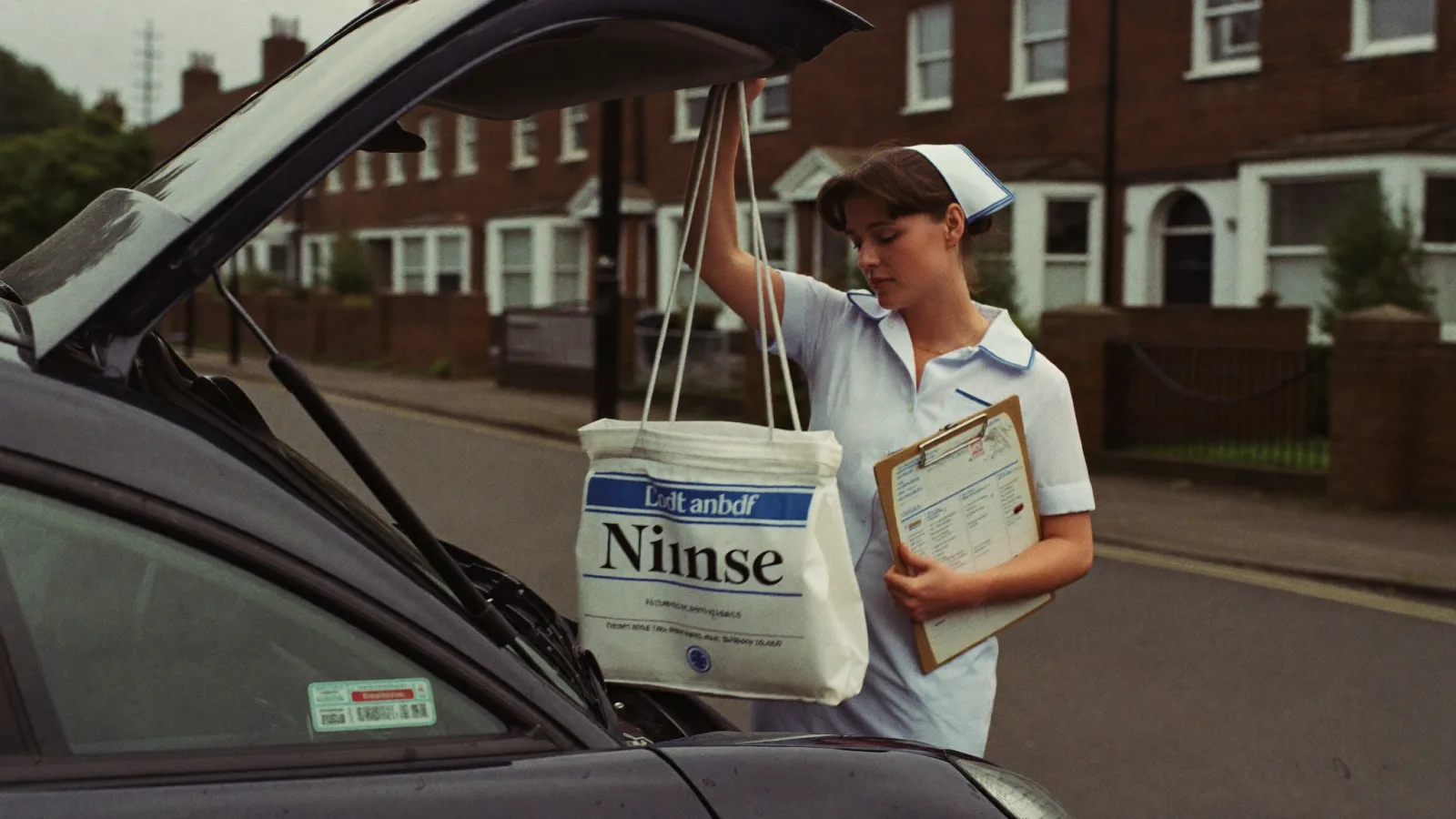
District nursing is the job many hospital nurses quietly envy and few understand in detail. The autonomy is real, the clinical work is often more complex than people expect, and the day is shaped by something no ward nurse has to think about: geography. To make it concrete, this article follows a composite day with a community nursing team. The nurse described, Bev, is not a real person; she is an illustrative composite drawn from common patterns.
There is no handover in the ward sense. Bev arrives at the team base for eight, and the morning starts with the caseload allocation: the visits due today, spread across a patch of several square miles, divided between the nurses, healthcare assistants and nursing associates on duty.
Allocation is a small daily act of clinical judgement. Some visits are routine and can go to any competent member of the team. Some need a registered nurse. Some need the nurse who knows that particular patient, because the family situation is difficult or the wound is not straightforward. And the whole thing has to make geographical sense, because an hour spent driving is an hour not spent nursing.
Bev takes eleven visits. That is a busy but not unusual list. She checks the notes on the ones she does not know, loads her bag and the boot with dressings, catheter supplies, syringes and equipment, and leaves.
A leg ulcer dressing. Twenty-five minutes, in a front room with the television on. The clinical part is assessment as much as dressing: has the wound improved, is there infection, is the compression correct, is the patient managing. Wound care in the community is a specialist skill and community teams carry a great deal of it.
An insulin administration. A short visit for a gentleman who cannot manage his own injections. Ten minutes of clinical work and ten minutes of everything else: he lives alone, his daughter has not visited in a fortnight, and he wants to talk.
A palliative visit. Longer. A woman in the last weeks of life at home, with a syringe driver that needs checking and reloading, symptoms that need assessing, and a husband who is exhausted and frightened and needs someone to explain what is likely to happen. Bev checks the anticipatory medicines are in the house, contacts the GP about a dose adjustment, and calls the hospice community team.
This visit takes over an hour, which throws out the rest of the morning. It always does, and it is always right.
Between visits there is the car. On a rural patch this can be twenty minutes each way; in a city it is parking, which is its own recurring problem, particularly in areas with permit schemes.
Community nurses spend a substantial part of the working day driving, and it has consequences people underestimate. It is where you eat lunch. It is where you take phone calls. It is where you decompress between a palliative visit and a routine one, which is not much time to change gear.
This is the fundamental difference from hospital nursing, and everything follows from it.
You are a guest. In hospital the patient is in your environment and follows its rules. In the community you are in theirs, and they decide. If someone does not want to do the thing you recommend, you cannot organise the environment around compliance; you can only explain, negotiate and come back.
You see the whole picture. The state of the house, whether there is food, whether the heating is on, whether the family carer is coping, whether the medication in the cupboard has been taken. A great deal of what community nurses do is act on things nobody referred them for.
Safeguarding is routine. Self-neglect, financial abuse, carer strain that has tipped over, unsafe living conditions. Community teams make a lot of referrals, and they are often the only professionals crossing the threshold.
Lone working is real. You go in alone, often to homes you do not know. Teams have lone working policies, tracking systems and protocols for visits assessed as higher risk, and they matter. Aggressive dogs, hoarded houses and hostile relatives are all part of the job.
Bev catches up on the phone in the car: a call to the GP about the palliative patient, a call to the team base to say she is running late, a call back to a family who left a message.
The unscheduled work is a defining feature. Someone has been discharged from hospital with a catheter that is not draining. A GP has requested an urgent visit. Someone's dressing has come off. These land during the day and are absorbed into a list that was already full.
Afternoon visits continue: a catheter change, a post-operative wound review, a new patient assessment following a hospital discharge, which is the longest visit of the day because it involves a full assessment, a care plan, ordering equipment and coordinating with other services.
Documentation, referrals, ordering supplies, and handing over anything outstanding to the evening or twilight service.
Community services have moved substantially to mobile working, with notes written on a tablet or laptop in the car or the home, which helps. It has not eliminated the block of administration at the end of the day.
Clinical autonomy. There is no doctor down the corridor and no nurse in charge to check with. You assess, you decide, you act, and you are accountable for it. Community nurses escalate constantly, but they do it having already formed a view.
Breadth. Wound care, catheters, continence, diabetes, palliative and end of life care, medication management, venepuncture, pressure area care, bowel care, syringe drivers, assessment of deterioration, and a great deal of coordination with other services.
Time management under constant disruption. The list will not survive contact with the day, and rebuilding it repeatedly is a core skill.
Comfort with ambiguity. You leave people at home with risk that a hospital would not tolerate, because that is where they want to be, and you manage it rather than eliminate it.
District nursing proper is a specialist practitioner qualification, a post-registration programme leading to recorded status. Many community nursing teams include registered nurses who are not qualified district nurses, alongside district nurses who lead and hold caseload responsibility. If you want the district nurse role specifically, that programme is the route, and it is usually employer-sponsored.
It suits nurses who want autonomy, who like continuity with patients over months and years, who are comfortable making decisions alone, and who prefer a day with variety and open air to a day in one building. It suits people who want to see the effect of what they do over time.
It suits less well people who want a team physically around them, who are uncomfortable working alone, who dislike driving, or who need the immediate escalation options a hospital provides.
Most community nurses who have done both say the same thing: the workload is heavier than people think and they would not go back.
This article is general information, not legal, immigration or medical advice. Always confirm current requirements with the relevant official body.
Where to look next
Keep reading
We would like to set one optional cookie that recognises your browser when you come back, so we can tell returning visitors from new ones. It stays off unless you say yes, and you can change your mind at any time. Cookies that keep you signed in are always on. Read our cookie policy