

Day in the life7 min
A realistic, hour-by-hour look at what a hospital healthcare assistant shift involves, based on a composite of typical roles rather than one real person.
By Grace Donnelly, Staff Writer — Grace writes profession explainers and day-in-the-life features for Healthcare Job Search.

Healthcare assistant is one of the most common job titles in the NHS and private hospitals, and one of the least understood from the outside. Job adverts tend to list duties in a fairly dry, bulleted way: personal care, observations, supporting nursing staff. What they rarely capture is the rhythm of an actual shift, and how much the role depends on judgement, patience and physical stamina as much as any specific task. To make the role more concrete, this article follows a composite shift built from common patterns on a busy general hospital ward. The person described, Marie, is not a real individual; she is an illustrative composite used to walk through what a typical early shift involves.
Marie arrives around twenty minutes before her shift officially begins, which is fairly typical, even though she is only paid from the start time. She gets changed into uniform, checks the board for which bay she has been allocated to, and has a quick look at which patients are new since her last shift. Early shifts on a general ward often start early in the morning, and the ward is already moving by the time she clocks in: night staff finishing observations, the first call bells of the day starting to sound.
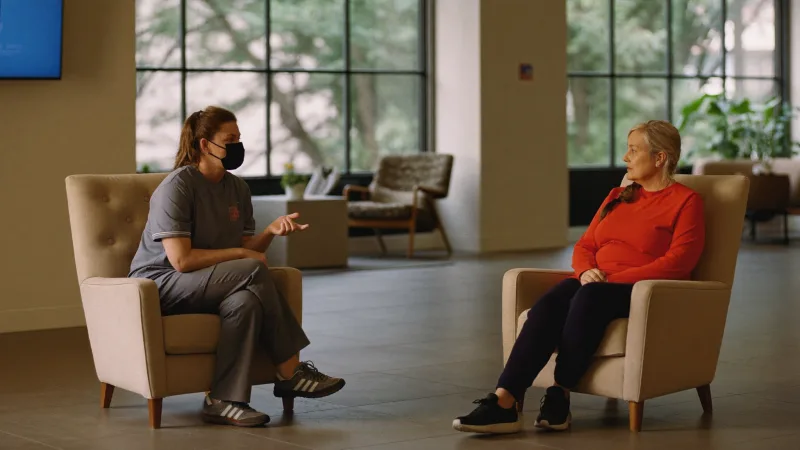
Handover is one of the most important parts of the shift, even though it can look, from the outside, like people just standing around a desk. The outgoing night team briefs the incoming day team on each patient: how they slept, any changes in condition, falls risk, mobility, and anything specific the team has been asked to watch for. Marie listens for the details that affect her directly: who needs help with washing and dressing, who is nil by mouth, who has a pressure area being monitored, and who has been flagged as confused or at risk of falling overnight.
The first hour or two of most shifts is dominated by personal care: helping patients wash, dress, use the toilet or commode, and get comfortable for the day. This is physical work, often involving moving and handling patients with mobility aids or hoists, and it requires a fair amount of tact, since needing help with basic tasks like washing can feel undignified for patients who were fully independent before admission. A good healthcare assistant learns to do this efficiently without ever making it feel rushed.
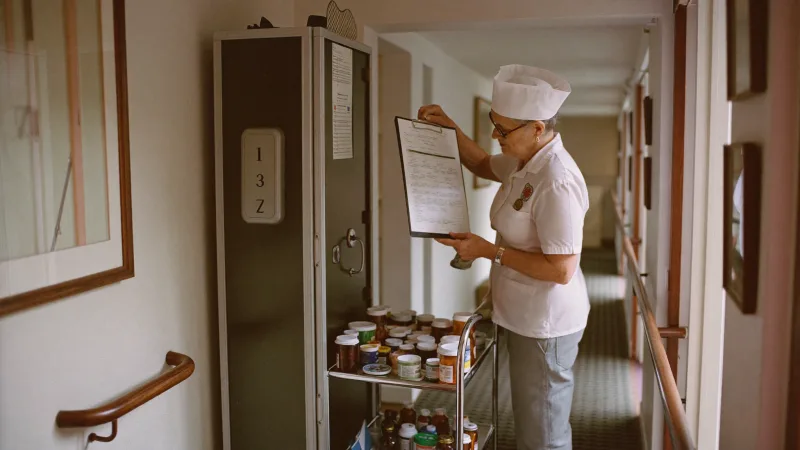
Alongside personal care, Marie is doing regular observations: checking blood pressure, pulse, temperature and oxygen levels for her allocated patients, and recording them accurately. Spotting a reading that looks wrong, or a patient who seems more drowsy or confused than the day before, and escalating it to the nurse in charge promptly, is one of the quieter but genuinely important parts of the job.
By mid-morning, the pace usually shifts toward supporting mealtimes and mobility. Some patients need help eating and drinking, some need encouragement to get up and walk short distances as part of their recovery, and others need repositioning to protect their skin if they are largely bedbound. Marie also spends time simply talking to patients, since being in hospital is often lonely and disorientating, and a few minutes of normal conversation can matter as much as any clinical task on the list.
Lunch service brings its own demands: checking dietary requirements, assisting those who need help, and recording food and fluid intake accurately for patients being monitored. It is rarely a quiet period.
Afternoons often bring a mix of tasks: supporting patients going for tests or procedures elsewhere in the hospital, helping with admissions and discharges, restocking supplies, and continuing rounds of observations and repositioning. Family visiting time can add another layer, with relatives asking questions that Marie needs to judge whether she can answer herself or should pass to the nursing team.
Throughout the day, she is also documenting what she has done, since accurate records matter both for patient safety and for the wider team to know what has already happened on a shift.
What a shift schedule cannot really capture is the emotional weight some days carry. Marie might spend part of an afternoon sitting with a patient who has just received difficult news, simply being present because there is nobody else free to do so at that moment. She might help a family say goodbye to a relative who is dying, or comfort someone who is frightened before a procedure. None of this appears on a task list, but it is a real and constant part of the role, and it is one reason healthcare assistants often describe the job as far more demanding, in a human sense, than the official duties suggest.
At the same time, there are genuinely good moments in most shifts: a patient who is finally well enough to go home after a long stay, a small joke that lifts the mood of a bay, or simply the satisfaction of a shift where everyone got the care and attention they needed. Healthcare assistants who stay in the role long term often say it is this mix, the difficult moments alongside the rewarding ones, that keeps them coming back, more than any single task on the job description.
Toward the end of the shift, Marie helps prepare for handover to the next team, making sure observations are up to date and any concerns are flagged clearly. A long shift, which is common in many hospital settings, means she is often tired by this point, both physically from the moving and standing, and mentally from the concentration required to notice small changes in patients throughout the day.
A shift like Marie's, on a busy general hospital ward, is only one version of the role. In a care home, the pace is usually less frantic but the relationships with residents tend to run much deeper, since healthcare assistants and carers often support the same people for months or years rather than a single admission. In community settings, the role can involve travelling between patients' own homes, working far more independently and with less immediate backup than on a ward. Anyone considering the role is well served by thinking about which of these environments actually suits their own temperament, rather than assuming all healthcare assistant jobs look like the hospital version most commonly portrayed.
Healthcare assistant roles are also a genuine entry point into wider healthcare careers. Many nurses, nursing associates and allied health professionals started in a support worker role before moving into further training, often supported by their employer through apprenticeships or study leave. Even for those who stay in the role long-term, there is usually scope to specialise, for example in areas like phlebotomy, theatre support or specific clinical areas, building expertise over time.
If you are considering this kind of role, it is worth talking to current healthcare assistants at organisations you are interested in, since the day-to-day experience can vary noticeably between a busy acute ward, a community setting and a care home.
This article is general information, not legal, immigration or medical advice. Always confirm current requirements with the relevant official body.
Where to look next
Keep reading
We would like to set one optional cookie that recognises your browser when you come back, so we can tell returning visitors from new ones. It stays off unless you say yes, and you can change your mind at any time. Cookies that keep you signed in are always on. Read our cookie policy