
Nursing specialties6 min
Perioperative nursing is a distinct world with its own roles, language and rhythm. What scrub, circulating and recovery nurses do, and how to get into theatres.
By Aisha Rahman, Staff Writer — Aisha writes about nursing specialties and training routes for Healthcare Job Search.
Theatre nursing is a world with its own vocabulary, its own hierarchy and its own rhythm, and it is largely invisible to nurses working anywhere else. People who move into it often describe it as changing profession rather than changing ward. It is also one of the areas where recruitment is persistently difficult, which makes it worth understanding if you are considering a change.
Perioperative nursing splits into distinct roles, and understanding the difference is the first thing to get straight.
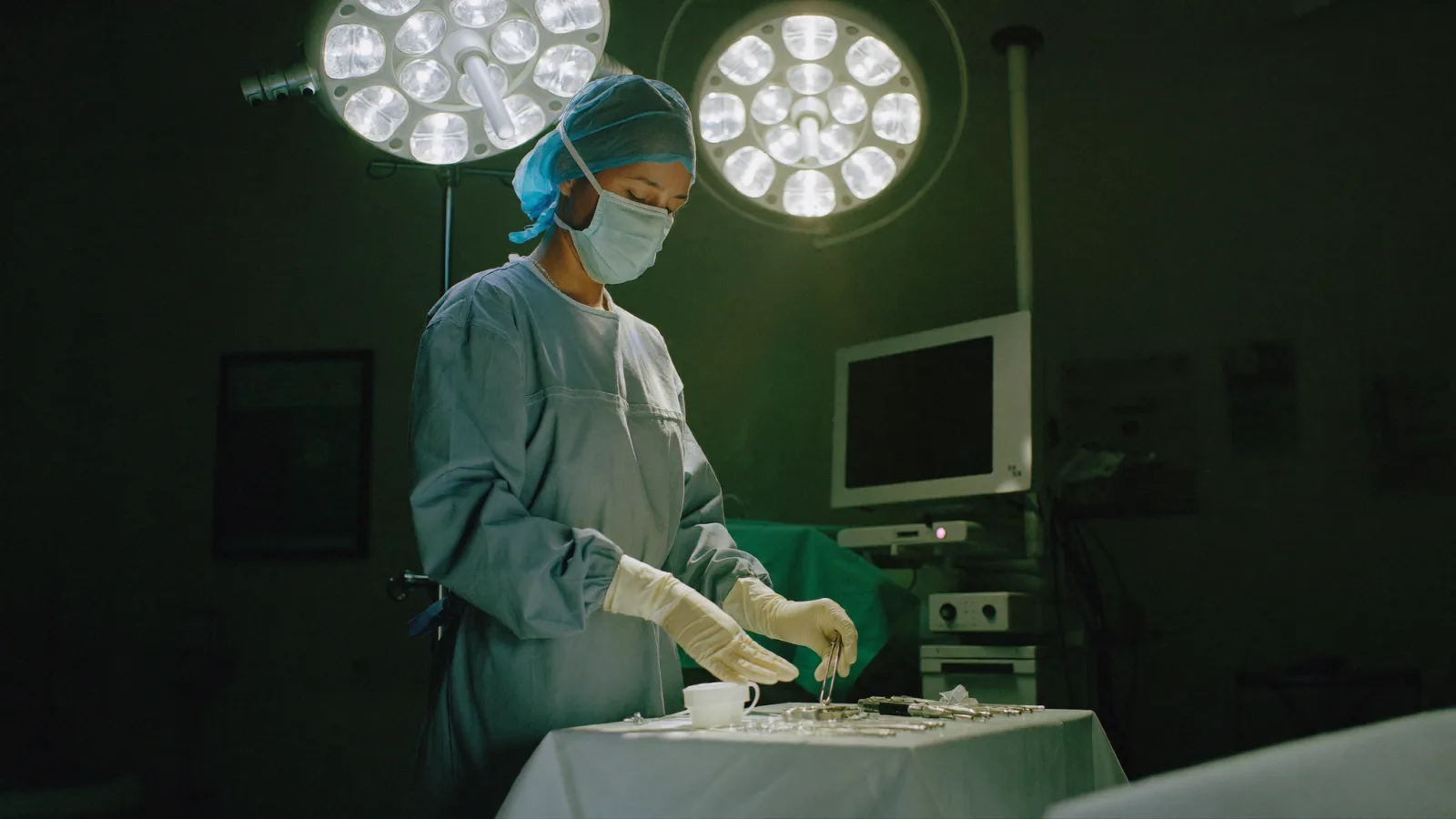
Scrub. The scrub practitioner is sterile, gowned and gloved, standing at the table with the surgeon. They manage the instruments, anticipate what is needed next, pass instruments and materials, and are responsible for the sterile field. They also lead on counting: swabs, needles and instruments are counted before, during and after, and the scrub practitioner is accountable for that count being right. Getting it wrong has consequences that end up in a never events report.
Good scrub practitioners know the operation, and often the individual surgeon, well enough to have the instrument in their hand before it is asked for. That fluency takes years and is the thing experienced theatre staff are quietly proud of.
Circulating. Sometimes called the runner. Not sterile, and responsible for everything the sterile team cannot touch: fetching equipment, opening packs onto the sterile field, positioning, documentation, managing specimens, liaising with the rest of the department, checking swabs with the scrub practitioner. The circulating role is the link between the sterile field and the outside world, and in a difficult case the circulating practitioner is doing a great deal of thinking under pressure.
Anaesthetics. Assisting the anaesthetist through induction, maintenance and emergence: preparing drugs and airway equipment, assisting with intubation, monitoring, managing the airway trolley, and being the second pair of hands in an emergency. This role is heavily shared with operating department practitioners.
Recovery, or post-anaesthetic care. Receiving patients immediately after surgery, managing airway, pain, nausea and haemodynamic stability during emergence from anaesthesia, and deciding when someone is fit to return to the ward. Recovery nurses work with a high degree of autonomy and are the people who catch post-operative deterioration first.
Most theatre practitioners rotate through several of these, and departments generally value people who can cover more than one.
Theatres are staffed by registered nurses and by operating department practitioners, who train specifically for this environment through a separate degree and register with the Health and Care Professions Council.
The two work alongside each other, often interchangeably in scrub and anaesthetic roles, with some differences in scope and in where each is most commonly deployed. If you are choosing a route into theatres from scratch rather than moving from an existing nursing role, the ODP degree is worth considering seriously as a direct three-year route.
It is a list, not a ward round. The day is structured around a theatre list, with a planned sequence of cases. There is a team brief at the start and a debrief at the end, and a safety checklist run before each patient. That structure is one of the things people like about it.
The patient contact is short and intense. You meet someone in the anaesthetic room, often frightened, for a few minutes. Then they are unconscious. Nurses who move from ward work frequently name this as the hardest adjustment: the relationship-building that drew them to nursing largely disappears.
What replaces it is a different kind of care, and experienced theatre nurses are firm about this. Advocating for an unconscious patient who cannot speak for themselves, ensuring dignity when they are exposed and positioned, checking that the right procedure is happening on the right person on the right side, and protecting them from harm while they cannot protect themselves is nursing, even though it looks nothing like it from outside.
It is physically demanding in an unusual way. Standing still for long periods, sometimes hours, in the same position, in lead aprons for some cases. Musculoskeletal complaints are common. Theatre lists also overrun, and a case that goes wrong does not stop at the end of your shift.
On-call and emergencies. Most theatre departments run an emergency on-call rota, which means being called in overnight. This is a significant lifestyle factor and one to ask about specifically.
Theatres have a reputation for being hierarchical and occasionally intimidating, and it is not entirely undeserved historically. The environment is high-stakes and time-pressured, and that has sometimes been used to excuse behaviour that would not be tolerated elsewhere.
This has changed substantially, driven partly by safety work: the surgical safety checklist, team briefs, and human factors training have all pushed toward flattening the hierarchy, because the evidence is clear that a theatre where the most junior person feels able to speak up is a safer theatre. But it varies by department and by specialty, and it is worth asking about culture directly at interview and paying attention to how the team interacts when you visit.
The other side of theatre culture is that teams are close. You work with the same people repeatedly on demanding cases, and the camaraderie is frequently cited as the best part of the job.
Theatres recruit at Band 5 and will generally take nurses with no theatre experience, because they have to; the pool of experienced practitioners is small. Expect a structured period of supernumerary time and a competency framework to work through.
Useful preparation:
Progression runs through senior scrub and team leader roles into theatre coordinator, theatre manager and departmental leadership. There are also surgical first assistant roles, which involve assisting directly with the procedure and require additional qualification, and advanced practice routes in perioperative and surgical care.
Specialisation is real and valued: practitioners who become expert in a particular surgical specialty are sought after, and the skills transfer readily into the independent sector, which does a great deal of elective surgery and often offers daytime working with less on-call.
It suits people who like precision, procedure and technical skill, who work well under pressure, who enjoy being part of a tight team, and who are comfortable with a form of nursing that is not conversational.
It suits less well people who came into nursing primarily for the relationships with patients, or who dislike standing still.
For the standards and training routes, the relevant professional bodies for perioperative practice publish guidance, and individual departments will describe their own competency frameworks.
This article is general information, not legal, immigration or medical advice. Always confirm current requirements with the relevant official body.
Where to look next
Keep reading

We would like to set one optional cookie that recognises your browser when you come back, so we can tell returning visitors from new ones. It stays off unless you say yes, and you can change your mind at any time. Cookies that keep you signed in are always on. Read our cookie policy