Nursing specialties6 min
What mental health nursing involves in the UK, why interest in the specialty has grown, and the main training and entry routes into the profession.
By Aisha Rahman, Staff Writer — Aisha writes about nursing specialties and training routes for Healthcare Job Search.
Mental health nursing has moved from a somewhat overlooked corner of the nursing profession to one that is talked about with growing seriousness, both by policymakers and by nurses themselves considering where to specialise. It remains a distinct field of registration in the UK, separate from adult, children's and learning disability nursing, with its own particular skills, settings and rewards. If you are weighing up whether it is the right specialty for you, it helps to understand both why interest in the field is growing and what the day-to-day training and career path actually looks like.
Awareness and openness around mental health have increased substantially in recent years, and more people now seek help for conditions that might once have gone unspoken or untreated. Earlier recognition and reduced stigma are broadly positive developments, but they also mean mental health services, across the NHS, private providers and the voluntary sector, are supporting a wider range of people than they perhaps expected to a generation ago, from crisis and acute care through to longer-term community support.
At the same time, there has been a sustained policy focus on parity of esteem, treating mental health services with the same seriousness and investment as physical health services, which has translated into service expansion and new roles across community mental health teams, crisis services, and specialist areas like perinatal mental health and mental health support in schools and primary care. Rather than pointing to any single statistic, the honest summary is that the range and reach of mental health services has grown, and grown in ways that require more registered mental health nurses across more settings than before.
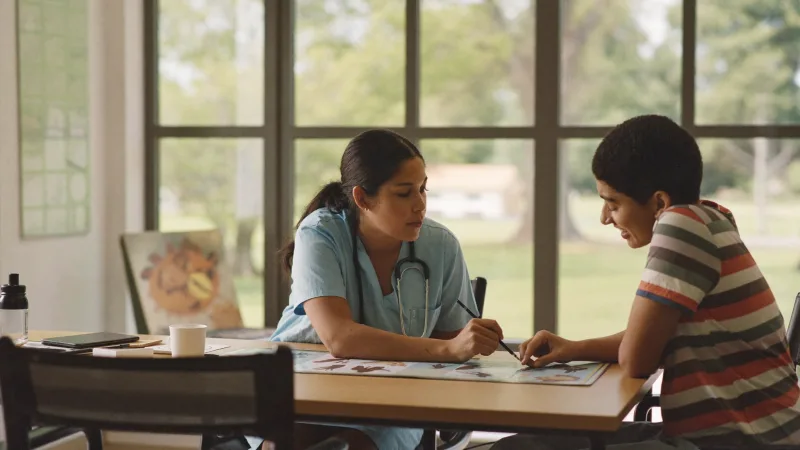
Mental health nursing is built around therapeutic relationships as much as clinical tasks. Nurses assess patients' mental state, plan and deliver care, administer medication, and support people through some of the most difficult periods of their lives, whether that is an acute crisis, a long period of inpatient care, or ongoing support in the community. A significant part of the role involves de-escalation, risk assessment, and building trust with people who may be frightened, distressed, or, at times, resistant to support.
Unlike some other nursing specialties, physical hands-on clinical tasks are a smaller part of day-to-day work, while communication, observation and judgement are central. Mental health nurses also work closely with psychiatrists, psychologists, social workers, occupational therapists and voluntary sector organisations, since good mental health care is rarely delivered by one profession working alone.
This range is part of what makes the specialty appealing to many nurses: the skills are transferable across very different environments, from a fast-paced crisis team to a steady, relationship-based community caseload.
In the UK, mental health nursing is typically studied as its own dedicated field within a nursing degree, meaning students choose this specialty from the outset rather than qualifying generally and specialising afterwards. Degree programmes combine university-based learning with substantial supervised clinical placements, including time in mental health settings specifically, and lead to registration with the Nursing and Midwifery Council as a registered mental health nurse on successful completion.
Alongside the traditional degree route, apprenticeship pathways have expanded significantly in nursing generally, including mental health nursing, allowing people to train while working and earning, often starting in a support worker role and progressing toward registration over several years. This has opened the specialty up to people for whom a traditional full-time degree is not realistic, including career changers with existing family or financial commitments.
Mental health nursing carries some persistent misconceptions that are worth addressing directly. One is that the role is primarily about restraint or managing dangerous situations; in reality, the great majority of the work is calm, relationship-based and focused on recovery, assessment and support, with crisis management being one part of the role rather than its defining feature. Another misconception is that mental health nursing is a lesser or less clinical specialty than adult nursing; in practice it involves its own detailed clinical knowledge, including pharmacology, risk assessment frameworks and structured therapeutic approaches, alongside the interpersonal skill the role is best known for.
A third misconception is that the work is uniformly bleak. While mental health nursing does involve supporting people through genuinely difficult periods, many nurses in the field describe it as one of the more hopeful areas of healthcare, precisely because they are able to walk alongside someone through recovery over time, in a way that is harder to do in faster-moving acute physical health settings. Understanding these realities, rather than relying on outdated or dramatised portrayals of the specialty, tends to give a much fairer picture of whether the role would suit you.
One notable development in recent years has been growing recognition that mental and physical health are closely linked, and that services work best when they do not treat the two as entirely separate systems. This has led to more liaison roles, where mental health nurses work within general hospitals supporting patients whose physical illness is complicated by mental health needs, and more joint working between physical and mental health teams in the community. For nurses entering the specialty now, this means the field is arguably broader and more connected to the rest of healthcare than it has been in the past, rather than existing as a separate track running in parallel.
Mental health nursing offers many of the same progression routes as other nursing fields: specialist roles in areas like perinatal mental health or eating disorders, advanced clinical practice with an expanded scope including elements of prescribing and diagnosis, leadership and management roles within mental health services, and education or research roles training future mental health nurses. Because the specialty spans such different settings, from acute wards to community and crisis teams, many mental health nurses also build varied careers by moving between settings over time, rather than staying in one type of role throughout.
If this specialty interests you, the Royal College of Nursing and individual university nursing departments both publish current, detailed information on entry requirements, apprenticeship options and what mental health placements typically involve, and are a good next step for anyone seriously considering the route.
This article is general information, not legal, immigration or medical advice. Always confirm current requirements with the relevant official body.
Where to look next
Keep reading

We would like to set one optional cookie that recognises your browser when you come back, so we can tell returning visitors from new ones. It stays off unless you say yes, and you can change your mind at any time. Cookies that keep you signed in are always on. Read our cookie policy