Nursing specialties6 min
Community nursing has its own qualifications, its own pressures and a level of independence hospital roles rarely offer. What the career path looks like.
By Aisha Rahman, Staff Writer — Aisha writes about nursing specialties and training routes for Healthcare Job Search.
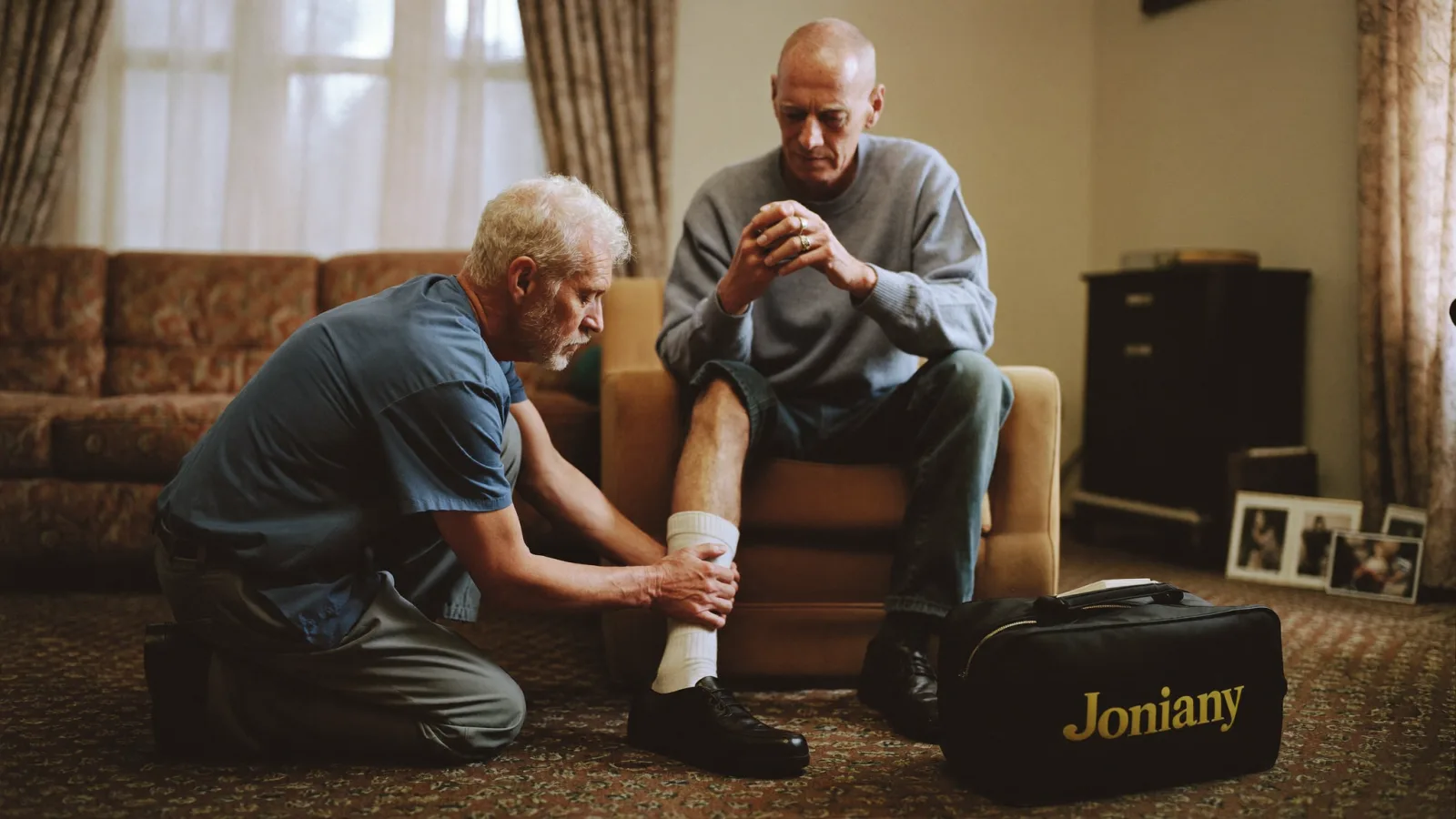
Community nursing has been quietly expanding for years, driven by policy that wants care delivered closer to home and by an ageing population with complex needs that hospitals are not the right place to meet. It is also, for a great many nurses, the setting where the job most resembles what they thought nursing would be.
"Community nurse" and "district nurse" are used interchangeably in conversation and they are not the same thing.
Community staff nurse. A registered nurse working in a community team, visiting patients at home, delivering clinical care across a caseload. Most community teams are largely made up of these posts.
District nurse. A registered nurse who has completed the specialist practitioner qualification in district nursing, a post-registration programme leading to a recordable qualification with the NMC. District nurses typically hold caseload responsibility, lead teams, carry out complex assessments and take clinical leadership for a patch.
Community nursing associate and community healthcare assistant. Delivering a substantial proportion of routine visits within their scope, and increasingly central to how teams function.
Specialist community roles. Community matrons, case managers for people with complex long-term conditions, tissue viability specialists, continence specialists, diabetes specialist nurses, heart failure nurses, respiratory nurses, palliative care nurses, and rapid response or urgent community response teams.
Other specialist community practitioner routes. Health visiting, school nursing and general practice nursing sit alongside district nursing as specialist community public health or community roles, each with their own qualifications.
The perception that community nursing is dressings and injections persists and is wrong.
The core caseload typically includes complex wound care and leg ulcer management, which is a specialist skill in its own right; catheter care and continence management; diabetes support including insulin administration; palliative and end of life care, including syringe drivers and anticipatory medication, which community teams carry a great deal of; medication management for people who cannot manage their own; venepuncture; bowel care; pressure ulcer prevention and management; and assessment of deterioration in people who are frail and often have several conditions at once.
Beyond the clinical tasks, the work involves holistic assessment, care planning, coordination with GPs, social services, hospices, therapists and equipment services, and a large amount of family and carer support.
Autonomy. You assess and decide alone. There is no nurse in charge to check with and no doctor down the corridor. Community nurses escalate constantly, but they do it having already formed a clinical view, which is a different mode of practice.
You manage risk rather than eliminate it. People at home take risks a ward would not permit, and part of the job is supporting someone's choice to live as they wish while making it as safe as it can reasonably be. Nurses who need certainty find this uncomfortable.
Continuity. You see the same people for months or years. You know the family. You notice change because you have a baseline that no hospital admission provides.
The social determinants are in front of you. Cold houses, no food, isolation, carers at breaking point, financial hardship. Community nurses make a large number of safeguarding and social care referrals, and a lot of the job is acting on things nobody referred you for.
Lone working. With everything that implies: personal safety protocols, unpredictable environments, and no immediate backup.
The car. Driving is a large part of the day, and a driving licence and access to a vehicle are usually essential. This is a practical barrier for some people and is worth checking before applying.
The specialist practitioner qualification is normally a one-year full-time or two-year part-time programme at degree or master's level, usually employer-sponsored, combining academic study with supervised practice under a practice teacher.
It covers advanced clinical assessment, caseload and team management, public health, prescribing in many cases, and leadership. Most programmes include or are taken alongside community nurse prescribing, which is a substantial practical gain.
Places are allocated by employers against their workforce plans, which means the route in is the same as most things: be in a community team, do well, make your intention known, and apply when a cohort opens.
Community teams do recruit nurses without community experience, and demand generally exceeds supply. But the transition is real and should be planned.
It would be misleading to present community nursing as a gentler option. Caseloads have grown, acuity at home is considerably higher than it was, and hospital discharge policy pushes people into the community sooner and sicker. Unscheduled work lands on lists that are already full.
There is also a documented pressure on the district nurse workforce specifically, with concerns raised over several years about the number of qualified district nurses relative to demand and the number of training places commissioned. Teams frequently run with fewer specialist practitioners than the caseload warrants.
Set against that, community nursing consistently reports high job satisfaction, and the reason people give is autonomy: they are able to nurse in the way they judge right, and they see the results over time.
Progression runs into district nursing, team leadership, community matron and case management roles, specialist nursing across long-term conditions and palliative care, advanced clinical practice in community settings, and into general practice nursing and primary care networks. Community experience is also strong preparation for education and leadership roles, because of the breadth of assessment and coordination involved.
For the qualification standards, the NMC publishes the requirements for specialist practitioner qualifications, and the Queen's Nursing Institute publishes material on community nursing practice and careers.
This article is general information, not legal, immigration or medical advice. Always confirm current requirements with the relevant official body.
Where to look next
Keep reading

We would like to set one optional cookie that recognises your browser when you come back, so we can tell returning visitors from new ones. It stays off unless you say yes, and you can change your mind at any time. Cookies that keep you signed in are always on. Read our cookie policy