
Career explainer6 min
Around a tenth of NHS activity depends on healthcare scientists most patients never meet. The specialisms, the training routes, and why the jobs are hard to fill.
By Priya Chandran, Staff Writer — Priya writes career explainers covering the full range of UK healthcare professions for Healthcare Job Search.
A very large proportion of clinical decisions rest on work done by people the patient never meets. Blood results, tissue diagnoses, imaging physics, genomic analysis, hearing tests, cardiac measurements, radiotherapy planning: all of it is healthcare science, and it is one of the least visible and most persistently understaffed parts of the workforce.
The field is usually described in four broad divisions, each containing many specialisms.
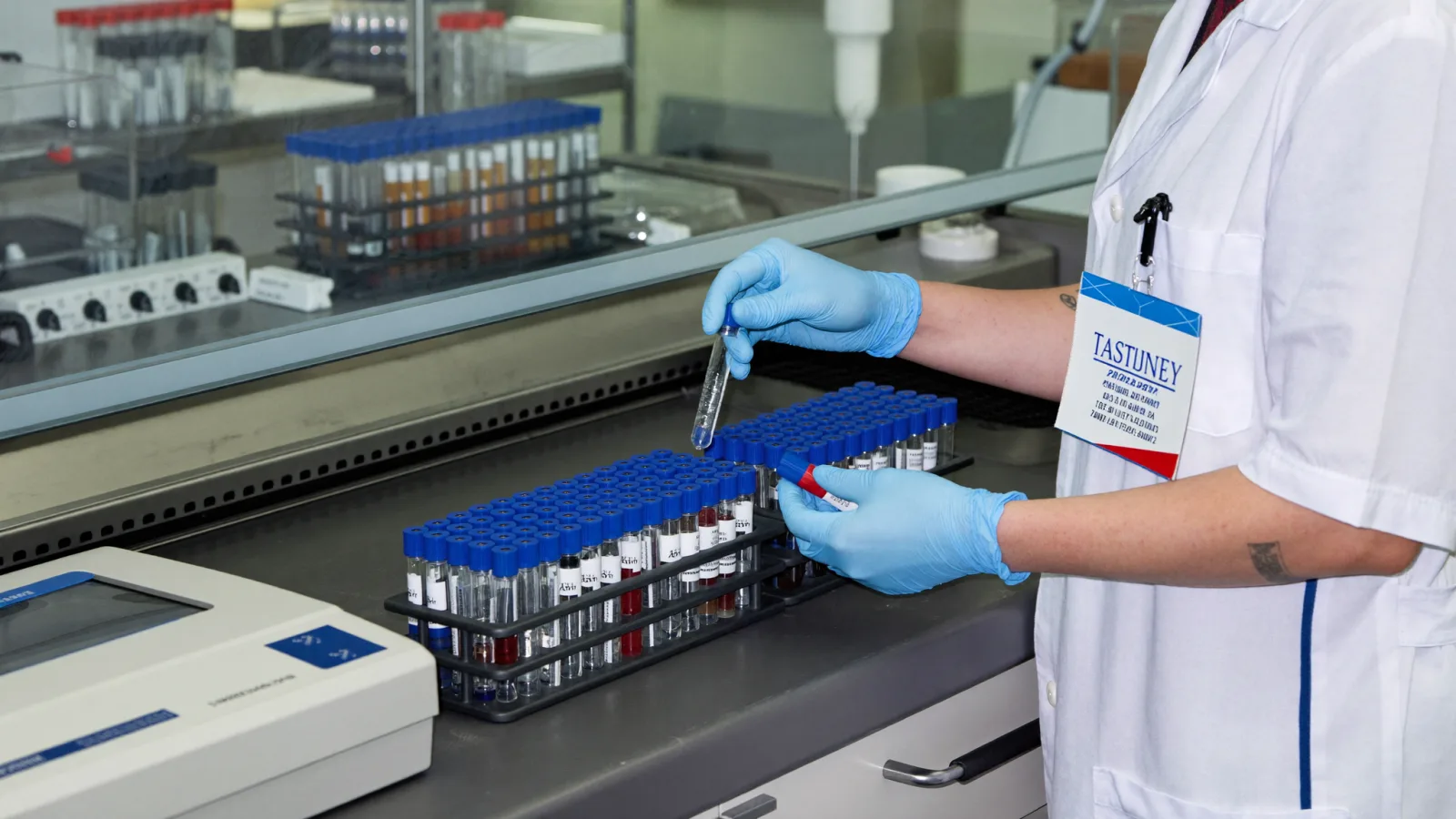
Life sciences. Laboratory-based work on samples: blood sciences including haematology, clinical biochemistry and transfusion; cellular pathology, where tissue is examined to diagnose cancer and other disease; microbiology and virology; immunology; genomics. Biomedical scientists are the largest professional group here, working alongside clinical scientists.
Physiological sciences. Direct patient testing and measurement: cardiac physiology, respiratory and sleep physiology, neurophysiology, audiology, vascular science, gastrointestinal physiology, ophthalmic and vision science. These roles involve substantial patient contact, which surprises people who assume healthcare science means a laboratory.
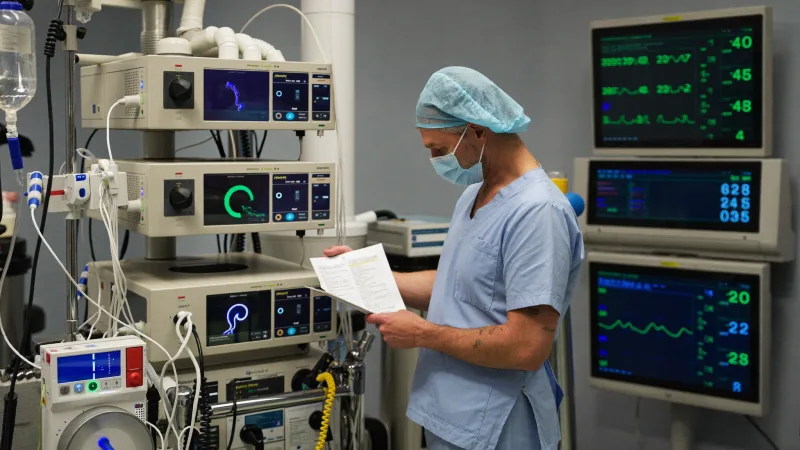
Physical sciences and biomedical engineering. Medical physics, radiotherapy physics, nuclear medicine, radiation protection, clinical engineering and rehabilitation engineering. This includes planning radiotherapy treatments, ensuring imaging equipment is safe and accurate, and maintaining the enormous quantity of medical equipment a hospital depends on.
Bioinformatics. Genomics, physical sciences and health informatics, analysing the very large datasets modern diagnostics generate. This is the newest area and the fastest growing.
Healthcare science assistant and associate. Support roles, typically entered with GCSEs or A levels, or through an apprenticeship. Genuine entry points with progression attached.
Biomedical scientist. Requires an accredited biomedical science degree and completion of a registration training portfolio, leading to registration with the Health and Care Professions Council. Biomedical scientists carry out and interpret the diagnostic testing that hospital medicine runs on. There is a long-standing shortage in several specialisms, particularly cellular pathology.
Clinical scientist. A higher-level role involving specialist scientific expertise, service development, research and clinical advice. The main structured route is the Scientist Training Programme, a three-year work-based master's programme, which is competitive. There are also equivalence routes for people who have gained the required competence by other means. Clinical scientists register with the HCPC.
Clinical technologist and engineer. Maintaining, testing and developing medical equipment, with registration available on the relevant voluntary register.
Higher specialist scientist. Beyond clinical scientist, through the Higher Specialist Scientist Training programme, leading to consultant clinical scientist roles.
The Practitioner Training Programme is an undergraduate route: a three-year integrated degree combining academic study with placements, leading to healthcare science practitioner roles, particularly in the physiological sciences.
Accredited biomedical science degrees followed by a registration portfolio completed in an approved laboratory. Some degrees include a placement year that covers the portfolio, which is by far the smoother route; without it, you need to find a laboratory willing to host you, which is the main bottleneck people encounter.
The Scientist Training Programme is the graduate route to clinical scientist: a salaried three-year programme combining a funded master's with work-based training in a specialism. It is competitive, applications open annually, and the specialisms available vary year to year.
Apprenticeships now exist at several levels, including degree apprenticeships in healthcare science, which allow entry without leaving employment.
Accuracy is the whole job. A wrong result changes a diagnosis. The quality control, standard operating procedures and accreditation regimes that govern laboratory work exist for that reason, and they shape the working day considerably.
Some of it is patient-facing and some is not. Physiological science roles involve seeing patients all day. Laboratory roles may involve none. This is the single biggest variable within the field and it is worth being clear which you want.
Automation has changed the work rather than removed it. Modern laboratories run large automated platforms, and the scientist's job has shifted toward validation, interpretation, exception handling and troubleshooting rather than manual technique.
Shift work exists. Diagnostic services run around the clock, and many laboratories operate a shift or on-call rota.
It is intellectually satisfying and largely invisible. People in the field are generally frank that nobody outside healthcare knows what they do, and that this is both a frustration and, for some, part of the appeal.
Several factors compound. The roles are poorly known, so few school leavers consider them. Training routes are structured and sometimes constrained by placement capacity rather than by demand. Some specialisms have an ageing workforce. And the private sector, particularly in genomics, bioinformatics and industry, competes for the same graduates with higher salaries.
The result is that reports on the diagnostic workforce have repeatedly identified shortages, particularly in cellular pathology, radiology-adjacent physics roles and some physiological specialisms. Demand meanwhile keeps rising, driven by earlier diagnosis, screening programmes and genomic medicine.
For a jobseeker, this is favourable. Qualified healthcare scientists in shortage specialisms are actively sought.
There is a genuine route from the bottom. Healthcare science assistant posts are advertised regularly and often require only GCSEs. From there, employers frequently support progression to associate and then to practitioner level through apprenticeships and part-time study.
This is one of the better-supported progression ladders in the NHS, partly because employers have found it easier to grow their own than to recruit qualified staff. If you are looking for a route into a technical clinical career without a degree, this is worth serious consideration.
Beyond the technical ladder there are routes into laboratory and departmental management, quality and accreditation, research, education, industry and commissioning. Consultant clinical scientist roles exist at the top of the clinical ladder and carry genuine authority over service design.
Healthcare science also transfers unusually well outside the NHS: diagnostics companies, pharmaceutical research, medical devices and biotechnology all recruit from this workforce.
For information on specialisms and training routes, the National School of Healthcare Science publishes details of the training programmes, and the relevant professional bodies and the HCPC set out registration requirements for each profession.
This article is general information, not legal, immigration or medical advice. Always confirm current requirements with the relevant official body.
Where to look next
Keep reading


We would like to set one optional cookie that recognises your browser when you come back, so we can tell returning visitors from new ones. It stays off unless you say yes, and you can change your mind at any time. Cookies that keep you signed in are always on. Read our cookie policy