
Career choices7 min
Palliative care attracts people for reasons other jobs cannot match, and asks things of them that other jobs do not. What hospice roles involve and how to get in.
By Aisling Byrne, Social Care Writer — Aisling writes about social care careers, training and qualifications for Healthcare Job Search.
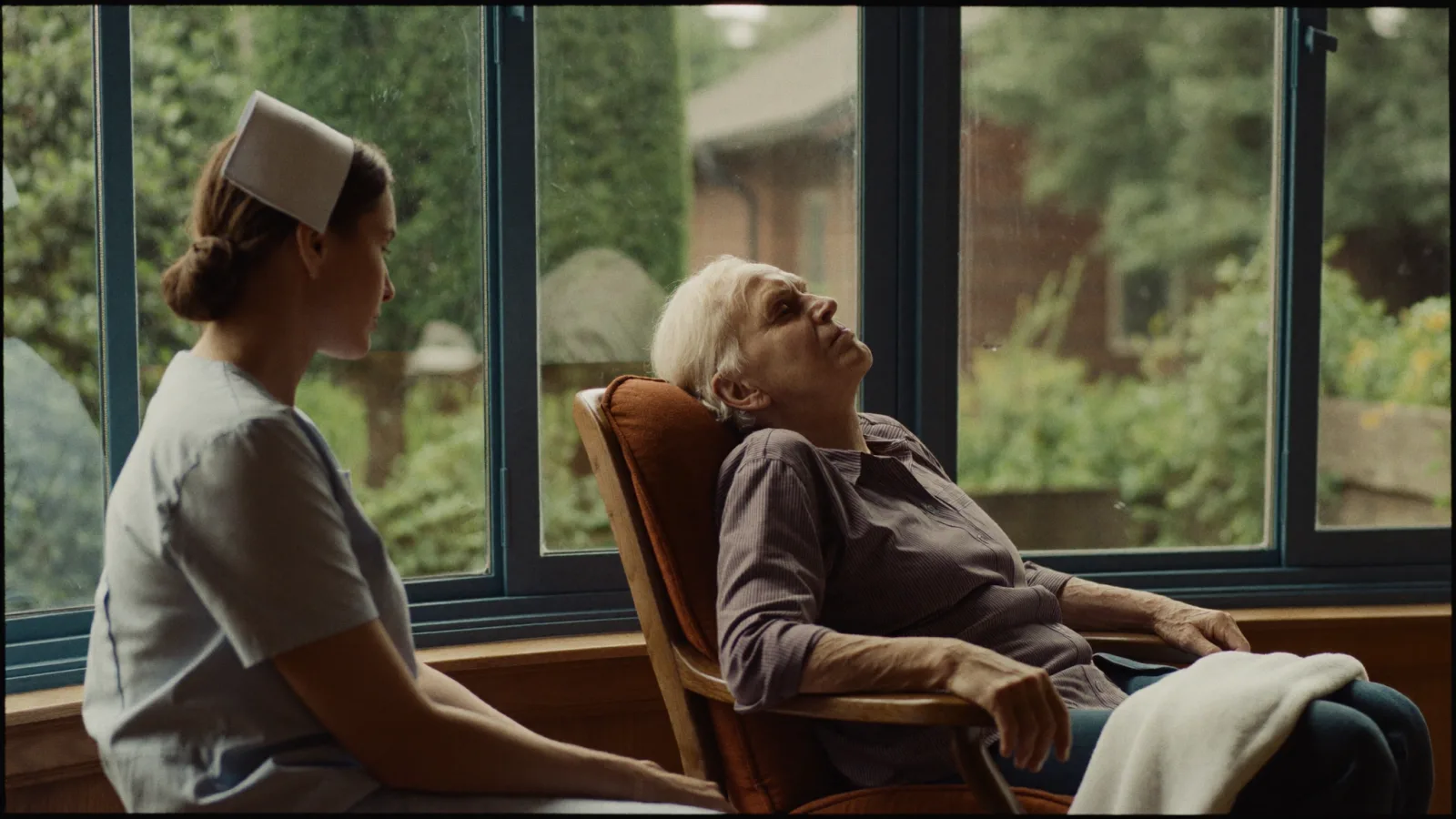
Hospice work attracts people who have usually thought carefully about it, and it keeps them for a long time. Turnover in hospices tends to be lower than in acute settings, and staff surveys in the sector generally report high satisfaction. It also asks something of people that other settings do not, and it is not, as is sometimes assumed, a slower or gentler version of hospital nursing.
Most UK hospices are independent charities rather than NHS organisations, funded through a mixture of NHS contracts, fundraising, retail and legacies. A minority are NHS-run. This matters for employment terms, which vary between hospices in a way NHS terms do not.
A hospice is also not only a building with beds. Most operate several services, and the inpatient unit is often the smallest part:
Registered nursing is the largest clinical group, and hospices employ healthcare assistants and senior healthcare assistants in substantial numbers. Beyond that there are doctors in palliative medicine, physiotherapists and occupational therapists, social workers, counsellors and psychologists, chaplains, complementary therapists, pharmacists and pharmacy technicians.
There is also a large non-clinical workforce that is easy to overlook: fundraising, retail management across charity shops, catering, housekeeping, maintenance, administration, volunteer coordination and communications. For people who want to work in the sector without clinical training, these are real careers, and retail and fundraising roles in particular exist in numbers.
Volunteers are central to how hospices operate, and volunteering is a common and genuinely useful route in for people considering a move.
Several things consistently surprise people who move from acute settings.
The ratios are better and the pace is different. Hospice inpatient units generally have more staff per patient than acute wards. That does not mean less work; it means the work is different. You spend longer with each person, and the expectation is that you will do things properly rather than quickly.
Symptom management is technically demanding. Palliative care involves complex pharmacology, syringe drivers, difficult pain, breathlessness, nausea, delirium and agitation. Clinicians moving into it frequently describe a steep learning curve, not a gentle one.
Communication is the core skill. Conversations about deterioration, prognosis, preferences and what matters to someone are the substance of the job rather than an adjunct to it. Most hospices invest heavily in training staff in these conversations, and it is one of the most transferable skills you will ever acquire.
Families are part of the unit of care. In an acute setting relatives are visitors. In a hospice they are people you are also caring for, before and after the death, and that is explicit rather than incidental.
Not everyone dies. A meaningful proportion of people admitted go home. Rehabilitation and enablement are real parts of the work.
Death is not usually a crisis. For staff coming from acute settings, the absence of the resuscitation reflex takes adjustment. Deaths are usually anticipated, planned for and accompanied, which many clinicians find is the thing that makes the work sustainable rather than the thing that makes it hard.
The question everyone asks is whether it is depressing. Staff overwhelmingly say it is not, and the reason they give is fairly consistent: they are able to do the job properly, they rarely feel they have failed someone, and the work has obvious meaning.
That does not mean it is without cost. Cumulative loss is real, some deaths land harder than others, particularly with people close to your own age or circumstances, and there are periods when several difficult cases coincide. Good hospices take this seriously, with clinical supervision, reflective practice, debriefs after difficult deaths, and access to psychological support. Whether those things are genuinely available is one of the most important questions to ask at interview.
The people who struggle are usually those who went in expecting it to be calm, or who have unresolved personal bereavement that the work reactivates. It is worth being honest with yourself about the second one.
Because most hospices are charities, terms vary. Many benchmark pay against Agenda for Change and describe posts in equivalent bands, and some hospices hold access to the NHS Pension Scheme for staff who were previously members, though this is not universal.
Pay is generally below what the same clinician could earn in a private hospital and broadly comparable to, or slightly below, the NHS equivalent, often with fewer unsocial hours because some services are daytime only. Annual leave and sick pay are frequently good. Ask specifically about pension access, sick pay and whether NHS continuous service is recognised, because the answers differ between hospices in the same city.
Hospices recruit steadily but in small numbers, and vacancies attract strong fields. Things that help:
At interview, expect to be asked directly about your own experience of death and loss and how you look after yourself. These are not trick questions; the panel is checking you have thought about it.
It suits people who want time with patients, who are drawn to complexity rather than speed, who communicate well and are willing to get better at it, and who find meaning in doing a difficult thing carefully. It suits people who are tired of feeling they cannot deliver the care they were trained to give.
It suits less well people looking for a quieter job, people who need the adrenaline of acute work, and people who are running from a bad workplace rather than toward this one.
For information about hospice services and careers, Hospice UK is the sector body for the UK, and individual hospices publish their own vacancies and volunteering routes.
This guide is general information, not legal, immigration or medical advice. Always confirm current requirements with the relevant official body.
Where to look next
Last reviewed 3 September 2026.
Keep reading

We would like to set one optional cookie that recognises your browser when you come back, so we can tell returning visitors from new ones. It stays off unless you say yes, and you can change your mind at any time. Cookies that keep you signed in are always on. Read our cookie policy