

Compliance & checks6 min
Health questionnaires, immunisation checks and adjustments. What occupational health actually asks, what they can and cannot tell your employer, and why it rarely blocks a job.
By Daniel Osei, Senior Careers Writer — Daniel covers NHS and social care job applications and recruitment processes for Healthcare Job Search.
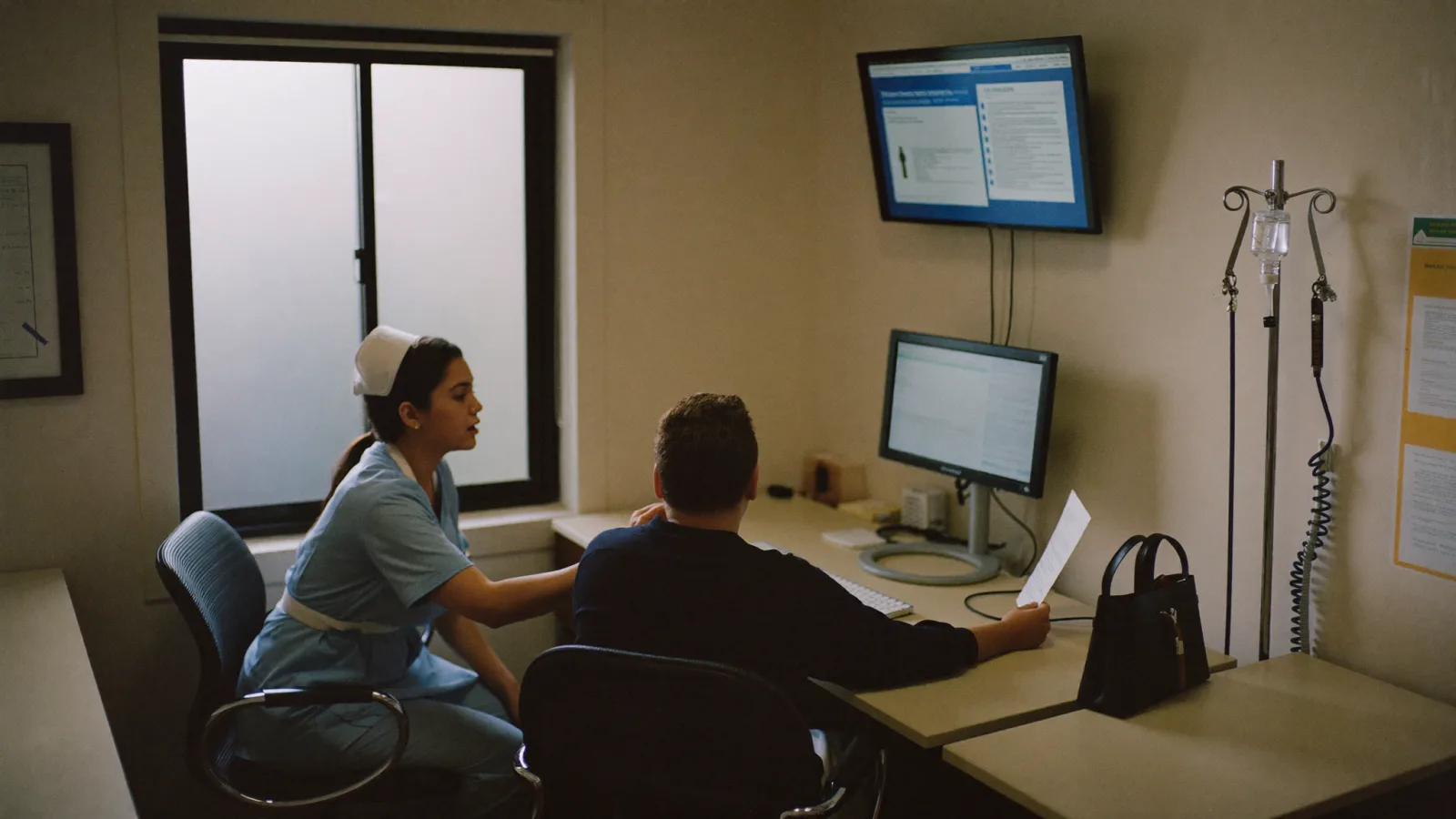
Occupational health clearance is one of the last pre-employment checks and the one people worry about most unnecessarily. The anxiety usually comes from a misunderstanding of what the service is for. Occupational health exists to work out what support and adjustments you need in order to do the job, not to look for reasons to keep you out of it.
An occupational health service advises the employer on fitness for a role, on adjustments, and on health surveillance requirements. It is staffed by clinicians, most often occupational health nurses and physicians, and it works to clinical confidentiality standards.
The distinction that matters is this: occupational health advises your employer, but it does not hand over your medical information. What your manager receives is normally a short statement of whether you are fit for the role, whether any adjustments or restrictions are recommended, and when a review is due. The underlying detail of your health stays with the clinical service unless you consent to it being shared.
People sometimes disclose less than they should because they assume their manager will read it all. That usually works against them, because the adjustments they need cannot be recommended if nobody knows they are needed.
Most employers start with a health questionnaire, completed online after a conditional offer. For the majority of applicants that is the whole process: the questionnaire is reviewed, clearance is issued, and you hear nothing more.
Where the questionnaire raises something, you will be contacted for a telephone or face-to-face assessment. This is a conversation with a clinician about what the job involves and how your health interacts with it. It is not an examination in most cases, though some roles require specific checks.
Occasionally, occupational health will ask your permission to seek a report from your GP or a specialist. You have to consent to this, you have rights around seeing the report before it is sent in most circumstances, and you can decline. Declining is not neutral, though, because the service may then have to advise on the basis of incomplete information, which can lead to more cautious recommendations than you would want.
Questionnaires vary, but expect questions covering your general health, any long-term conditions, mental health, musculoskeletal problems, allergies, medication that might affect safety-critical work, and immunisation history. Roles with specific hazards attract specific questions: skin problems for staff in frequent hand hygiene, respiratory health for staff needing respiratory protective equipment, and so on.
Answer honestly and fully. Under-disclosure is the most common mistake and it causes problems later, because an undeclared condition that then affects your work sits awkwardly, and because you forfeit adjustments you were entitled to. Occupational health clinicians see the full range of human health constantly and are extremely unlikely to be surprised by anything you tell them.
Health and care roles carry immunisation expectations, and you will normally be asked for evidence of your status for a set of vaccinations, along with evidence of immunity where relevant. If you cannot produce records, the service will usually arrange testing or a course of vaccination rather than treat it as a problem.
If your role involves exposure prone procedures, there are additional requirements around blood-borne virus screening, and these are governed by national guidance. It is worth knowing that a positive result for a blood-borne virus does not automatically end a clinical career; there are established frameworks setting out what can and cannot be done, and how staff are supported and monitored.
This is the part worth understanding properly. Under the Equality Act 2010, employers must not discriminate because of disability and must make reasonable adjustments where a disabled person is placed at a substantial disadvantage. The definition of disability is broader than most people assume and covers many long-term physical and mental health conditions.
The Act also restricts when health questions may be asked. In general, an employer must not ask about health before making a job offer, with specific exceptions, which is precisely why occupational health assessment happens after a conditional offer rather than before.
Adjustments in healthcare settings are routine and varied: altered shift patterns, limits on nights, equipment, changes to a workstation, phased return arrangements, adjusted break patterns, modified duties within a role, additional supervision during a settling-in period, or software and communication support. If you know what helps you, say so; you know your condition better than an assessing clinician who has met you once.
An offer being withdrawn after occupational health assessment is uncommon and, where a disability is involved, would need to be justified on the basis that no reasonable adjustment could make the role workable. If that happens to you, take advice from a union or from Acas rather than accepting it at face value.
People are more reluctant to disclose mental health history than physical health history, often because of a fear it will be held against them. In practice, disclosed and managed mental health conditions are extremely common among healthcare staff and are routinely accommodated.
What occupational health is assessing is not whether you have a diagnosis but whether you can do the role safely with whatever support is appropriate. Being open allows things like a phased start, adjustments to on-call, or an agreed plan for what happens if you become unwell, none of which can be put in place retrospectively.
Clearance is not the end of the relationship. You can self-refer to occupational health during employment in most organisations, and your manager can refer you with your knowledge. Using it early when something is affecting your work is far more effective than using it after a period of sickness absence has already accumulated.
Some roles also involve ongoing health surveillance, for example skin checks or respiratory monitoring, which is a legal requirement rather than a discretionary extra.
For the requirements applying to a specific role, your employer's occupational health provider is the right contact, and NHS Employers publishes the national pre-employment check standards covering the occupational health element.
This guide is general information, not legal, immigration or medical advice. Always confirm current requirements with the relevant official body.
Where to look next
Last reviewed 30 August 2026.
Keep reading

We would like to set one optional cookie that recognises your browser when you come back, so we can tell returning visitors from new ones. It stays off unless you say yes, and you can change your mind at any time. Cookies that keep you signed in are always on. Read our cookie policy